I’ve seen too many digital transformation projects collapse under their own weight.
You’re investing millions in AI, IoT, and cloud infrastructure. But if your Quality Assurance approach hasn’t evolved past traditional testing methods, you’re setting yourself up for failure.
Here’s the reality: the technology isn’t usually the problem. It’s how we test and validate these complex, interconnected systems that breaks down.
I’ve worked through enough large-scale digital transformation initiatives to know what separates success from expensive disasters. The difference comes down to one thing: shifting from basic testing to true quality engineering.
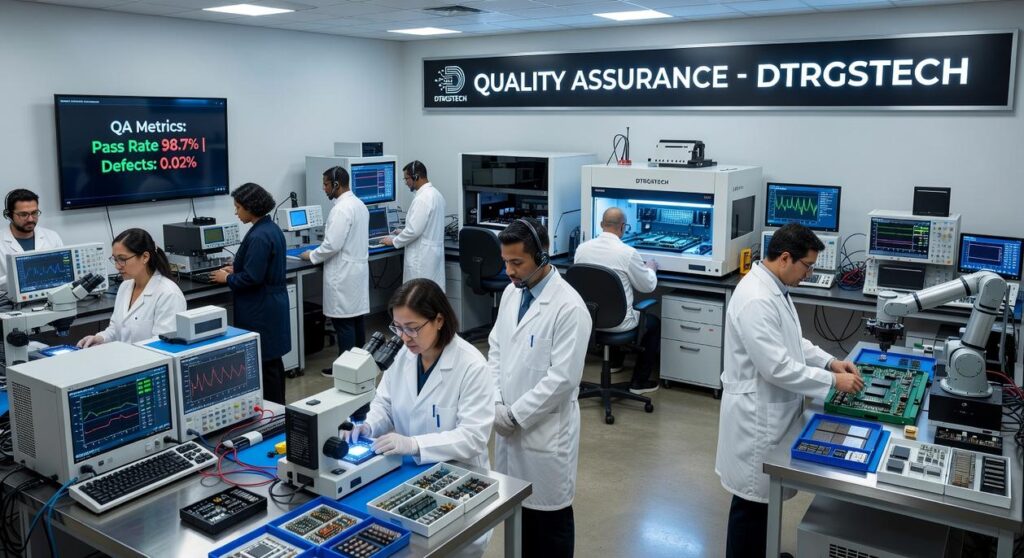
Dtrgstech has been in the trenches of these high-stakes projects. We’ve watched companies struggle with outdated QA frameworks that can’t keep up with modern system complexity.
This article gives you a framework for implementing QA that actually works across AI, IoT, and cloud technologies.
You’ll learn how to adapt your quality strategy so your digital transformation delivers real business value. Not just deployed technology, but systems that are resilient and actually improve user experience.
No theory. Just what works when the stakes are high and failure isn’t an option.
The Paradigm Shift: From Quality Assurance to Quality Engineering
You’ve probably noticed something.
Your QA team finds bugs at the end of sprints. Developers scramble to fix them. Release dates slip. Everyone gets frustrated.
This isn’t a people problem. It’s a process problem.
Traditional quality assurance was built for a different era. Back when software shipped in boxes and updates came once a year (if at all). You could afford to test everything at the end because the end was months away.
That world is gone.
Now you’re pushing code daily. Sometimes hourly. And the old quality assurance dtrgstech model just can’t keep up.
Some teams argue that you should just hire more QA testers. Throw more bodies at the problem. But that’s like trying to win a Formula 1 race by adding more mechanics at the pit stop instead of building a faster car.
Here’s what actually works.
Quality Engineering shifts the entire conversation. Instead of catching problems after they’re built, you prevent them from happening in the first place.
The old way vs. the new way:
- Manual testing vs. automated testing that runs with every code commit
- QA sits in a separate team vs. quality engineers embedded with developers from day one
- Testing happens at the end vs. quality checks built into every stage
- QA says no to releases vs. QE helps teams ship faster with confidence
I know what you’re thinking. This sounds like more work upfront.
You’re right. It is.
But here’s the part most people miss. Quality Engineering isn’t just about finding fewer bugs. It’s about making sure your technology actually does what your business needs it to do.
A bug-free checkout process that still confuses customers? That’s not quality. That’s just working code that fails at its job.
Quality Engineering asks different questions. Does this feature increase revenue? Does it reduce support tickets? Does it help users complete their actual goals?
That’s the shift. From gatekeepers who slow things down to partners who help you move faster while building better products.
Tailored QA Strategies for Core Digital Transformation Technologies
Cloud-Native & Multi-Cloud Environments
You can’t just test if your cloud app works anymore.
That’s table stakes.
What you need to focus on is whether your system can actually handle what’s coming. I’m talking about performance testing that goes beyond checking response times. You need to validate that your architecture scales when traffic spikes and recovers when things break (because they will).
Security testing matters more here than most people realize. Your cloud configurations and APIs are sitting ducks if you’re not testing them properly. One misconfigured S3 bucket and you’re on the news.
Here’s what I recommend. Run performance analysis specifically to catch cost bloat. You’d be surprised how many teams discover they’re burning thousands on inefficient queries or oversized instances.
AI & Machine Learning Systems
Testing AI systems is a different game entirely.
Start with your data. If your training data is flawed, your model will be too. That old garbage in, garbage out principle? It’s not just a saying. I’ve seen companies spend months building models only to find out their data quality was terrible from day one.
You need to test for model accuracy regularly. But here’s what most teams miss: models drift over time. What worked last quarter might not work now. Set up drift testing so you catch this before your users do.
Then there’s bias detection. This isn’t just an ethical checkbox anymore. Biased models create real business risk. Test for it like you would any other bug.
My advice? Add explainability testing to your workflow. When your model makes a decision, you should be able to explain why. Regulators are starting to ask for this, and the powers of qaaas dtrgstech can help you get there.
Internet of Things (IoT) Ecosystems
IoT testing is where things get messy fast.
You’re not just testing software. You’re testing hundreds or thousands of devices that all need to talk to each other. Start with interoperability testing between different device types and manufacturers. Just because two devices use the same protocol doesn’t mean they’ll play nice together.
Security testing needs to cover the entire chain. From the sensor on the edge all the way to your cloud backend. One weak link and you’ve got a problem.
Here’s what I tell teams: test connectivity under real conditions. Your devices won’t always have perfect network coverage. Test what happens when connections drop or get spotty. Because that’s exactly what will happen in production.
Finally, make sure your data ingestion platforms can handle the load. IoT devices generate tons of data. Quality assurance dtrgstech approaches help you verify your backend won’t choke when all those devices start sending information at once.
Building a Modern QA Framework: The Three Pillars of Success

Most QA frameworks I see are broken from the start.
They treat testing like something you tack on at the end. A checkbox before shipping. And then everyone acts surprised when bugs slip through or systems crash under real traffic.
I’ve seen this pattern repeat itself across dozens of teams. They say they care about quality but their process tells a different story.
Here’s what actually works.
Pillar 1: Continuous Testing in a DevOps Culture
Shifting left isn’t just another buzzword (even though it sounds like one).
It means you stop waiting until the end to find problems. You build testing into every single stage of your CI/CD pipeline. Unit tests catch issues at the code level. Integration tests verify that components work together. End-to-end tests confirm the whole system functions as expected.
When developers get feedback in minutes instead of days, they fix issues while the code is still fresh in their minds. That’s the real win.
I believe a unified test automation strategy is non-negotiable now. You can’t have different teams running different tools with different standards and expect consistent results. The pipeline needs one coherent approach that everyone follows.
Pillar 2: Comprehensive Performance Engineering
Performance is a feature.
Not something you check once before launch. Not an afterthought you address when users start complaining.
Load testing shows you how the system behaves under expected traffic. Stress testing reveals where it breaks. Scalability testing proves whether you can actually grow without rebuilding everything from scratch.
I’ve watched companies skip this step to save time. They always regret it. Real-world demand doesn’t care about your launch deadline.
Pillar 3: Embedded Security Assurance (DevSecOps)
Security can’t be someone else’s problem anymore.
You need automated security scanning built right into your QA process. SAST tools analyze your source code. DAST tools test running applications. IAST tools monitor from inside the application during testing.
When you catch vulnerabilities early, you fix them for pennies. Wait until production and the cost multiplies by a factor of ten (or worse, you’re explaining a breach to customers).
Quality assurance dtrgstech means making security part of the conversation from day one. Not after the technology updates dtrgstech team has already shipped.
That’s my take. Three pillars. No shortcuts.
Measuring What Matters: Next-Generation KPIs for DX Quality
Let’s be honest about something.
Bug counts are a terrible way to measure quality.
I’ve watched teams celebrate finding 500 bugs in a sprint like it’s some kind of achievement. Meanwhile, their customers are still frustrated and their release cycles are getting longer.
Here’s my take. If you’re still reporting on bugs found as your primary metric, you’re measuring the wrong thing.
Some QA leaders will tell you that bug metrics matter because they show your team is doing their job. They’ll argue that tracking defects is how you prove value to stakeholders.
But think about what that actually means. You’re essentially saying your value comes from finding problems, not preventing them or improving the business.
That’s backwards.
What Actually Moves the Needle
I started tracking different numbers a few years back. Metrics that connect directly to what executives care about.
Change Failure Rate is one of them. It tells you what percentage of your changes actually break things in production. Not how many bugs you found in testing, but how often your releases cause real problems for real users.
When I look at quality assurance dtrgstech work, this is what matters. Did the release succeed or fail?
Then there’s Mean Time to Recovery. Because failures will happen (they always do). What counts is how fast you can fix them and get back to normal.
I also watch how releases correlate with customer satisfaction scores. You can ship clean code all day long, but if users hate the experience, your quality metrics are lying to you.
The Process Health Check
Beyond outcomes, I pay attention to how smoothly things actually flow.
Cycle time shows you how long work sits in your pipeline. Lead time for changes reveals bottlenecks you didn’t know existed. And test automation coverage percentage tells you if you’re building for speed or still stuck in manual testing mode.
These aren’t vanity metrics. They’re early warning signs that something in your development process needs attention before it becomes a bigger problem.
Quality as a Catalyst for Transformation
I’ve shown you that quality assurance isn’t just a checkbox at the end of your project.
It’s what separates successful digital transformation from expensive failures.
You know the pain of outdated testing methods. They slow you down and leave gaps that competitors exploit. Every delayed release and every bug that reaches production costs you money and trust.
The answer is simpler than you think.
Shift to a quality engineering mindset. Build continuous testing into your development process from day one. Make automation and security part of how your team works, not something you add later.
This isn’t theoretical. Organizations that adopt these frameworks see real results.
Here’s what you need to do: Start implementing these testing frameworks now. Integrate automated and security-focused testing into your current workflows. Stop treating quality as a final step and make it part of your development fabric.
Dtrgstech helps organizations de-risk their technology investments through modern quality practices. We’ve guided teams through this shift and seen the impact firsthand.
Your digital transformation initiatives can deliver the business value you’re expecting. But only if you build quality into the foundation.
The choice is yours. Keep using methods that don’t match today’s complexity, or adopt an approach that actually works.
 Founder & Chief Executive Officer (CEO)