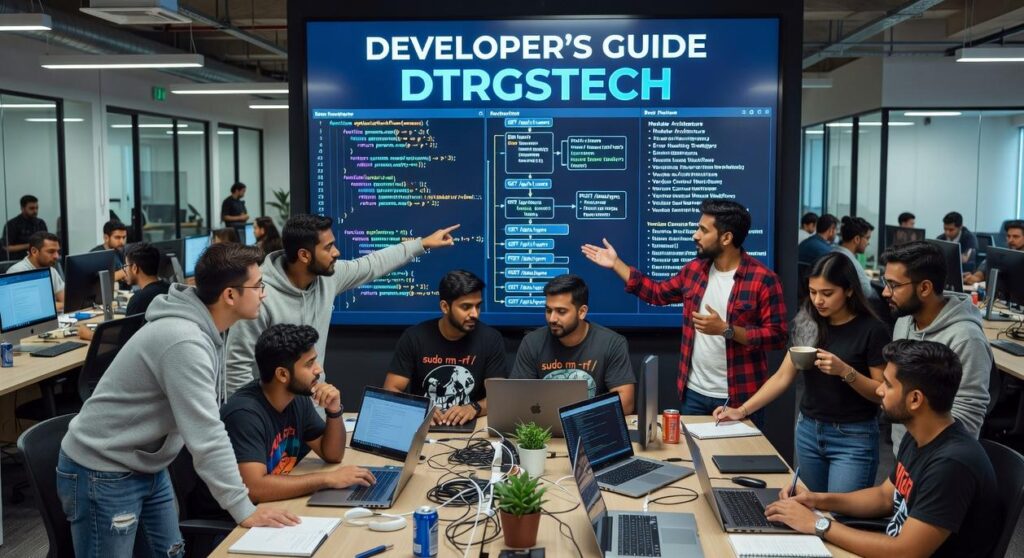
I’ve helped dozens of developers get DTRGSTech running without the usual headaches.
You’re probably here because the documentation left you with more questions than answers. Or maybe you started the integration and hit a wall three steps in.
Here’s the thing: DTRGSTech isn’t hard to implement. But the path from installation to working code isn’t always clear.
I put together this developers guide dtrgstech to give you a straight line from setup to deployment. No guessing about configuration. No trial and error with settings that should just work.
This guide follows the official best practices for the technology. I’ve included the code patterns that actually work in production and skipped the ones that look good in theory but fall apart when you test them.
You’ll learn how to set up your environment, configure the core components, implement the main features, and verify everything is running correctly.
By the end, you’ll have a functional DTRGSTech integration. Not a half-working prototype you need to debug for another week.
Let’s get started.
Prerequisites: Setting Up Your Development Environment
You’re staring at your terminal right now.
Cursor blinking. Waiting for you to make the first move.
I know that feeling. You want to build something with DTRGSTech but you’re not sure if your setup is even ready. (There’s nothing worse than diving into code only to hit a dependency error three hours later.)
Let’s fix that.
Some developers say you can just wing it and install things as you go. They argue that setting up everything upfront wastes time. And sure, if you enjoy the sound of error messages pinging your console at 2 AM, go for it.
But here’s what I’ve learned.
A clean setup saves you hours of frustration.
System Requirements
You need Node.js v18 or higher. Python 3.9 or above. And Docker running on your machine.
Check your versions now. Type node -v and watch those numbers appear on screen. If you see anything below 18, you’ll need to upgrade.
Acquiring Credentials
Head to the DTRGSTech dashboard. You’ll find it clean and minimal. No clutter.
Navigate to the API section. Click Generate New Key. You’ll see a long string of characters appear. That’s your API key. Copy it immediately because it only shows once.
Grab your secret token the same way.
Environment Configuration
Create a .env file in your project root. It should feel familiar if you’ve done this before. The file sits there quietly, holding your secrets away from prying eyes.
Add these lines:
DTRGS_API_KEY=your_key_here
DTRGS_SECRET=your_secret_here
Save it. Close it. Never commit it to version control.
Dependency Check
Install axios if you’re working in Node. Or requests for Python projects. These libraries handle HTTP calls smoothly, no friction.
Run your package manager. Watch the progress bars fill as dependencies download. You’ll hear your fan spin up slightly as everything installs.
When it’s done, your developers guide dtrgstech experience starts here.
Your environment is ready.
Step 1: Installation and Initial Configuration
Let’s get dtrgstech running on your system.
I recommend starting with npm if you’re working in a Node.js environment. The installation is simple:
npm install @dtrgstech/sdk
For Python developers, use pip instead:
pip install dtrgstech
Import and initialize the client in your main application file. Here’s what that looks like in JavaScript:
const DTRGSTech = require('@dtrgstech/sdk');

const client = new DTRGSTech({
  apiKey: process.env.DTRGS_API_KEY,
  apiSecret: process.env.DTRGS_API_SECRET
});
Now you need a configuration file.
Create a dtrgs.config.js file in your project root. This is where you set your connection parameters:
module.exports = {
  timeout: 5000,
  retryAttempts: 3,
  region: 'us-east-1'
};
The timeout value is in milliseconds. I recommend keeping it at 5000 for most applications. The retryAttempts setting tells the SDK how many times to retry failed requests before giving up.
Time to test your connection.
Run this quick check to make sure everything works:
client.connect()
  .then(() => console.log('Connected successfully'))
  .catch(err => console.error('Connection failed:', err));
If you see “Connected successfully” you’re good to go. If not, double check your API credentials in your environment variables.
Follow this developers guide dtrgstech sequence and you’ll have a working setup in under five minutes.
Step 2: Core Logic – Implementing a Data Processor

You’ve got your SDK initialized. Now what?
This is where most developers guide dtrgstech users hit a wall. They can connect to the system but don’t know how to actually process data.
Let me show you how to build a real-time data processor that actually works.
Setting Up Your Data Schema
First, you need to define what your data looks like. Think of it as creating a blueprint for the information flowing through your system.
Here’s a simple user event object:
const userEventSchema = {
  event_id: "string",
  user_id: "string",
  action: "string",
  timestamp: "number"
}
Nothing fancy. Just the basics you need to track what’s happening.
Connecting to the Data Stream
Now you need to subscribe to an endpoint. This is how you tap into the live data feed:
const stream = sdk.subscribe('/events/user_actions');
See how straightforward that is? You’re now listening to every user action that comes through.
Processing Incoming Events
Here’s where it gets interesting. You need an async callback to handle each data packet as it arrives:
stream.on('data', async (event) => {
  if (event.action === 'purchase') {
    await processTransaction(event);
  }
});
The function runs every time new data hits your endpoint. No polling. No delays.
Want to know what does a software engineer do dtrgstech? This is it. Writing code that responds to real-world events in real time.
Sending Data Back
Sometimes you need to push data back through the system:
sdk.send('/commands/update', {
  user_id: event.user_id,
  status: 'processed'
});
That’s your complete data processor. It listens, processes, and responds.
Step 3: Verification, Logging, and Debugging
You’ve got the SDK installed and configured.
Now comes the part most developers skip. Testing that it actually works.
I recommend starting with a simple unit test. Send a mock event through the system and check if it lands where you expect. Something like a test user signup or a sample transaction. If the response comes back clean, you’re good to move forward.
But what if it doesn’t work?
Turn on verbose logging. Most SDKs let you crank up the log level during development. You’ll see exactly what’s happening under the hood (and trust me, you want this visibility when things go wrong).
Here’s what usually breaks first.
Authentication Failed means your API key is wrong or expired. Double check your credentials and make sure you copied the entire key.
Invalid Schema happens when your event structure doesn’t match what the API expects. Check the developers guide dtrgstech for the exact field requirements.
Connection Timeout typically points to network issues or firewall rules blocking outbound requests.
Once you’ve got clean logs, I suggest setting up a health check. Most SDKs include a built-in function that pings the connection and returns status. Call it periodically to catch issues before they become problems.
Run it on startup. Run it before critical operations.
This simple check saves hours of debugging later when you’re wondering why events stopped flowing.
Step 4: Best Practices for Production Environments
You’ve got your DTRGSTech integration working.
Now comes the part that separates hobby projects from real systems.
Production environments don’t forgive sloppy code. One unhandled error at 3 AM and you’re scrambling to figure out why data disappeared.
I’m going to walk you through four practices that’ll save you from those moments.
Error Handling That Actually Works
Wrap every SDK call in try-catch blocks. Not just the ones you think might fail. ALL of them.
Network calls fail. APIs timeout. Servers restart.
Build retry logic that persists. When a request fails, don’t just log it and move on. Queue it up and try again with exponential backoff (wait longer between each retry attempt).
Speed Matters
Connection pooling keeps you from opening a new connection every single time. Reuse what you’ve already got.
Batch your requests when possible. Sending 100 individual calls? See if you can bundle them into 10.
Go asynchronous. Don’t make your application sit around waiting for responses it doesn’t need right now.
Keep Your Keys Safe
Never hardcode API keys. Period.
Use environment variables or a proper secrets management system. Your developers guide dtrgstech should already be using this pattern, but I still see hardcoded keys in production code way too often.
If your key ends up in version control, you’ve already lost.
Shut Down Clean
When your application stops, disconnect the DTRGSTech client properly. Here’s what that looks like:
process.on('SIGTERM', async () => {
  await dtrgstechClient.disconnect();
  process.exit(0);
});
This prevents data loss during deployments or restarts.
These aren’t optional nice-to-haves. They’re what keep your system running when things go wrong. And things WILL go wrong.
For more on keeping your systems current, check out technology updates dtrgstech.
Your DTRGSTech Implementation is Ready
You came here to build a working DTRGSTech integration.
Now you have it.
This guide walked you through setup, configuration, and production-ready practices. You followed a clear path instead of stumbling through trial and error.
That matters because most teams waste weeks on configuration mistakes and integration headaches. You skipped that.
Your DTRGSTech integration is secure and ready to power your application. The foundation works.
But you’re not done yet.
Head to the developers guide dtrgstech and explore the advanced features. Custom data transformations can save you processing time. Real-time analytics give you visibility into what’s actually happening with your data.
The basic setup is behind you. The advanced capabilities are waiting.
Start with one feature that solves your biggest bottleneck. Build from there.
 Founder & Chief Executive Officer (CEO)